Feed Your Brain: Add Before You Subtract
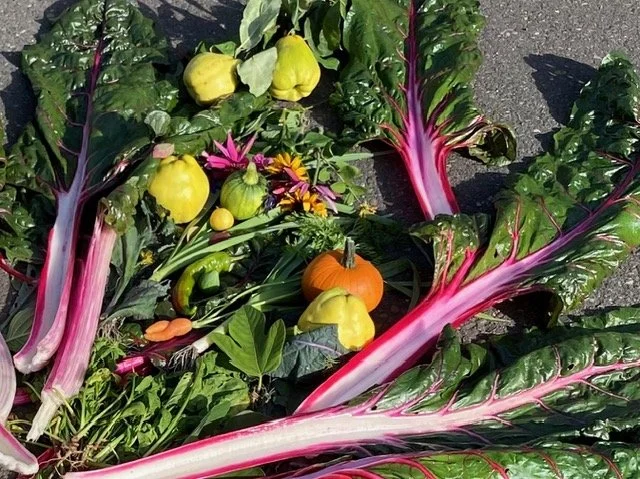
For years, many of us were taught to see healthy eating through the lens of restriction: Less sugar. Less salt. Less carbs. Less fat. Less This. Less That. No wonder meal planning sometimes feels just plain hard.
But what if supporting your brain health did not begin with restriction? What if it began with thoughtful addition?
That simple shift, to add before you subtract, can create a calmer, more sustainable path forward.
Over the years, both professionally and personally, I’ve seen that sustainable health rarely comes from rigid food rules. It usually begins with small, repeatable choices that are easily accomplished.
If you’ve ever finished reading another magazine article, watched another health segment, or scrolled past another social media post and suddenly felt like you should clear out your pantry, throw away everything in your refrigerator, and start over from scratch, you are not alone!
Nutrition advice can feel busy, complicated, contradictory, and at times unnecessarily rigid.
Most people are not looking for a perfect diet; they are looking for a realistic way to eat that supports health, energy, and clarity over time.
And that is very good news.
Your Brain is High Maintenance!(in a good way)
Consider this:
Your brain may account for only about 2% of your body weight, but it uses roughly 20% of your energy supply. It is metabolically active, constantly communicating, repairing, regulating and adapting.
That means what supports overall health often supports brain health, too.
Food influences everything in our bodies, and for brain health we are especially focused on the effects food has on:
inflammation
blood vessel health
insulin / blood sugar balance
neurotransmitte production
energy stability
Hydration matters too, as do sleep, movement, and stress. This is why I often remind my clients (and myself): Brain Health is Health.
Most of us have at one time or another tried some version of diet overhaul; and sometimes these efforts help, but sometimes they simply create fatigue, guilt, and another cycle of starting over.
If this sounds painfully familiar, the following may make perfect sense to you.
Why “Add Before You Subtract” Works…
instead of a strict plan, A trendy diet, a supplement stack or even a well-intentioned reset.
You might try asking: What could I easily add that would support my brain?
This “add” mindset often decreases confusion and helps build consistency. Instead of removing everything at once, you begin by thinking in terms of adding nourishment.
A handful of berries
A serving of leafy greens
A spoonful of beans
a drizzle of olive oil or a few walnuts
one more colorful vegetable.
Tiny “wins” often create lasting change - and benefits. Not perfection. Not a miracle supplement or a single superfood.
Support.
A Pattern that Continues to Make Sense: the MIND style of eating:
One eating pattern that has gained attention in brain health research is the MIND diet. It combines principles from the Mediterranean style of eating, DASH nutrition guidance, and research focused specifically on cognitive health.
At it’s core, it is refreshingly practical, and it emphasizes familiar foods:
leafy greens
berries
beans
nuts
olive oil
colorful vegetables
whole grains
fish and poultry
This is not about eating “perfectly”. It is about bulding a pattern that supports vascualr health, reduces inflammation, and may help protect long-term cognitive function. That sounds pretty hopeful, doesn’t it?
Why Berries & Greens Get So Much Attention
If you’ve read about brain-healthy foods, you’ve probably noticed berries and dark leafy greens appear again and again. That is not marketing hype.
These foods are rich in compounds that support healthy aging and vascular function.
Berries contain plant compounds such as polyphenols and flavonoids that help reduce oxidative stress (and therefore the effects of aging) on the brain.
Leafy greens provide nutrients like folate, lutein, vitamin K, fiber, and antioxidants that support multiple systems tied to brain health.
Are they miracle foods?
No. (there is no such thing). But they are strong, reliable players in a supportive eating pattern.
Blueberries, strawberries, blackberries, cherries.
Spinach, kale, arugula, Swiss chard, collards.
Simple foods. Repeated often.
Food Should Be Supportive - not Stressful
Healthy eating often becomes overwhelming because many people assume:
I need to overhaul everything.
I need the perfect plan.
I should eliminate every food that brings me pleasure.
I must be doing this wrong!
But brain health thrives through consistency, not rigidity.
A meal should feel supportive, not punishing, not fear-based. And definitely not another source of decision fatigue.
You do not need a flawless diet, you may just need a few intentional additions repeated over time, and A Simple Place to Begin.
This week, ask yourself:
What is one thing I can add to my plate that simply supports my brain?
A little more color, a little more fiber.
A little more nourishment and a little less confusion or indecision.
This is often where clarity begins.
And in brain health, small steady choices often matter more than dramatic change.
“Just a song before I go… “
Or, what I can offer to get you started: my recipe for Viking Granola - which I think is an easy introduction to a MIND diet breakfast - and a variation on a theme from my life.
You can find it here:
I hope you make it, and I hope you enjoy it! If you do, or if you have questions, feel free to drop an email to jan@jansoloy.com.
I’ll see you next month!
Jan
Some of the RESEARCH REFERENCES used in preparation of this post include:
Rush University Medical Center / MIND Diet research (Martha Clare Morris)
National Institute on Aging
Harvard T.H. Chan School of Public Health
A Gentle Invitation
If this perspective resonates with you, if you’ve been looking for a more thoughtful, grounded approach to brain health, especially after midlife, I invite you to explore the Golden Clarity Protocol.
Not as something you have to take on or master, but as a way to better understand what already matters.
I look forward to walking this path with you.