Movement That Matters: Building a Better Brain One Step at a Time
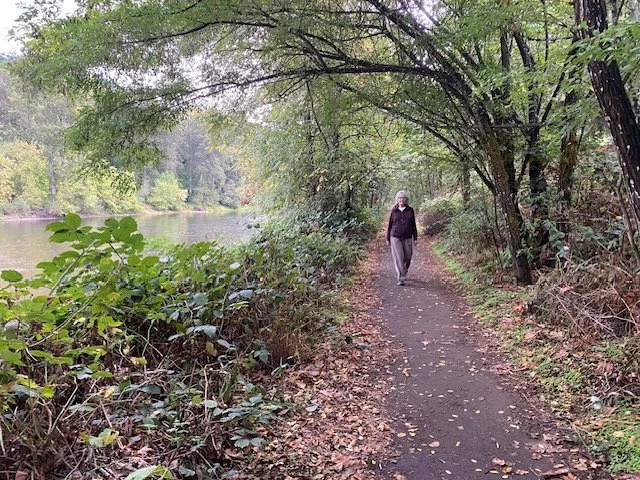
"Movement is life." It's a phrase we've heard for many years, but when we stop and think about it, we realize it means far more than simply keeping our bodies fit.
Movement is what keeps us alive, biologically speaking. Every heartbeat, every breath, every muscle contraction supports metabolism, circulation, cellular repair, and communication throughout the body. Without movement, our bodies—and our brains—begin to lose some of their remarkable capacity to adapt and thrive.
When it comes to brain health, the science continues to point in the same encouraging direction: regular movement is one of the most powerful ways we can support our brains as we age.
And thankfully, July gives us a gentle invitation to begin.
The warmth of summer makes movement feel just a little easier. Evening walks become more inviting. Gardens need tending. Farmers' markets encourage leisurely strolling. Even our joints sometimes seem a little happier in the warmth of the sun.
July can also be a little tricky
We imagine we'll naturally become more active, but life has a way of filling every sunny day. Vacations interrupt routines and sometimes visitors arrive. Gardens demand attention. We stay up later because it's still light outside. Before we know it, another week has gone by, and that walk we intended to take "tomorrow" keeps getting postponed.
Good intentions are plentiful this time of year. Consistency is a little harder.
So, we may find ourselves wondering: does any of this really matter?
We've all heard the advice to "get your steps in." Is it 7,000? Is it 10,000? Is walking really enough?
And what if movement simply isn't as easy as it once was?
Perhaps arthritis slows you down. Maybe fatigue or chronic pain makes establishing a routine difficult. Maybe you've never enjoyed the gym, and lifting weights beside people half your age feels anything but appealing.
Or perhaps you've quietly begun to wonder if it's simply too late to make much difference.
If any of those thoughts sound familiar, I hope you'll keep reading.
The good news is wonderfully encouraging.
Small amounts of regular movement truly do matter, and your brain notices every one of them.
Movement Looks Different After Midlife
Many of us remember years filled with family bike rides, busy careers, long hikes, gardens, and children who kept us constantly on the move. Activity happened naturally because life required it.
Now life often looks different.
Retirement changes routines. We may drive more than we walk. We spend more time sitting than we realize. Without intending to, daily movement quietly slips away; even though we know exercise is "good for us."
Sometimes, underneath it all, is another belief: "If I can't exercise the way I used to, there's really no point."
Nothing could be further from the truth.
Another limiting belief I hear often is this: "I've never been an exercise person."
As if enjoying movement were a personality trait rather than something we can rediscover.
Perhaps the problem isn't that you dislike moving.
Perhaps you simply haven't found movement that fits the season of life you're living now.
That's a very different conversation.
Somewhere along the way, many of us also began believing that exercise only "counts" if we're wearing workout clothes, tracking our heart rate, or spending an hour at the gym.
Fortunately, our brains don't keep score that way.
Walking the dog, pulling weeds, playing on the floor with a grandchild.
Climbing the stairs, or remembering to stretch while the coffee brews.
It all counts.
Brain health isn't built through perfection.
It's built through consistency.
How Movement Supports Brain Health
Imagine taking a brisk walk through your neighborhood.
Within just a few minutes your heart begins pumping a little faster, carrying fresh oxygen and nutrients throughout your body, including the remarkable three-pound organ that quietly manages your memories, attention, emotions, creativity, and ability to plan tomorrow's grocery list.
Movement also triggers something even more remarkable.
Researchers have discovered that exercise increases production of Brain-Derived Neurotrophic Factor, or BDNF.
You don't have to remember the name, just think of it as many researchers do when they call it "fertilizer for the brain."
Just as healthy soil helps a garden flourish, BDNF helps nourish brain cells, strengthen connections between them, and support learning and memory. It also helps maintain neuroplasticity—the brain's lifelong ability to adapt and change.
Movement doesn't simply help maintain the brain, it helps the brain continue growing throughout life.
A common myth is that if you've missed years of exercise, you've missed your opportunity.
Thankfully, research tells us otherwise. You don't have to erase the past to improve your future.
The brain remains capable of change throughout our lives.
A Little Goes a Long Way
One of the greatest myths about exercise is that it has to be intense to be worthwhile.
Fortunately, the evidence says otherwise.
The U.S. Department of Health and Human Services recommends about 150 minutes of moderate activity (like walking at about a 3mph pace – or I like to say the speed at which I can talk, but not sing) each week; roughly 30 minutes on most days.
But those minutes don't have to happen all at once. Three ten-minute walks provide many of the same benefits as one longer walk.
Walking remains one of the simplest forms of exercise available. It requires little more than a comfortable pair of shoes, can happen almost anywhere, costs nothing, and supports both body and brain.
Strength training deserves a place in the picture as well, and just twice each week can make a meaningful difference.
And that doesn't necessarily mean barbells or complicated gym equipment. Wall push-ups, carrying groceries, gardening, or standing up repeatedly from a sturdy chair all help maintain the muscle mass that supports healthy aging.
Flexibility and balance matter too, and they can be as simple as basic stretching while the coffee brews. Or a few minutes of gentle yoga before bed.
I like to do a little “habit stacking” and make a practice of balancing on one foot while I brush my teeth.
Or, if you're fortunate enough to have classes nearby, show up and do some Tai Chi in the park.
After I fractured my arm in a fall last summer, a sports medicine physician enthusiastically told me, "Do Tai Chi! It's one of the best evidence-based ways we know to help prevent falls."
His advice stayed with me.
These small practices help us stay steady, confident, and able to keep doing the things we enjoy.
Finding the Right Movement After 60.
Perhaps the most important lesson I've learned, both professionally and personally, is this:
Movement should fit your body, not someone else's.
If knee arthritis limits your walking or hiking.
perhaps water exercise is the answer.If fatigue makes long walks difficult.
2 or 3 shorter walks throughout the day may work beautifully for you.If chronic pain is part of your story.
gentle stretching or chair yoga may be exactly the right place to begin.
There are two main points here:
There is no prize for suffering through exercise you dislike.
The best movement is simply the movement you'll continue doing.
How Healthy Habits Work Together
If you've been following along with the Golden Clarity Protocol™, you've probably noticed a pattern.
Brain health isn't built by one miracle food or one supplement, one perfect workout, or one perfect night's sleep.
Instead, each healthy choice strengthens the next. When we nourish ourselves well, we have more energy to move. When we move regularly, we often sleep more deeply.
And better sleep improves mood, concentration, and resilience.
Feeling better emotionally makes it easier to stay connected to family, friends, and community, and those relationships reduce stress, which supports brain health all over again.
Each healthy habit becomes part of a positive cycle that weaves a fabric of wellness.
We don't have to do everything at once. We simply begin where we are.
One Step at a Time
Perhaps movement's greatest gift to brain health after midlife is that it reminds us that we are still active participants in our own future.
Every walk around the neighborhood, every afternoon in the garden.
Every stretch before bed or dance in the kitchen.
Every game with a grandchild.
Every choice to stand up instead of remaining seated.
None of it is wasted.
July doesn't ask us to become athletes, it simply invites us outside to notice the warmth.
To linger in the garden, maybe wave to a neighbor.
To walk a little farther than yesterday, and to remember that movement isn't another task on the to-do list, it’s one of the ways we fully participate in our own lives.
This month, I hope you'll notice the opportunities for movement that already exist around you.
You don't need to train for a marathon and you don't need to become someone you're not.
Simply begin.
One walk or one stretch.
One stronger, healthier step at a time.
If you're ready to build brain-healthy habits one simple step at a time, I'd love to have you continue the journey with me.
The Golden Clarity Protocol™ brings together the science of movement, nutrition, sleep, stress management, mindset, and connection in a practical, encouraging framework designed specifically for life after midlife.
You don't have to do everything at once. You simply have to begin.
Disclaimer: This article is intended for educational purposes only and should not replace personalized medical advice from your healthcare provider.