Try Something New: Why Curiosity is Good for Your Brain
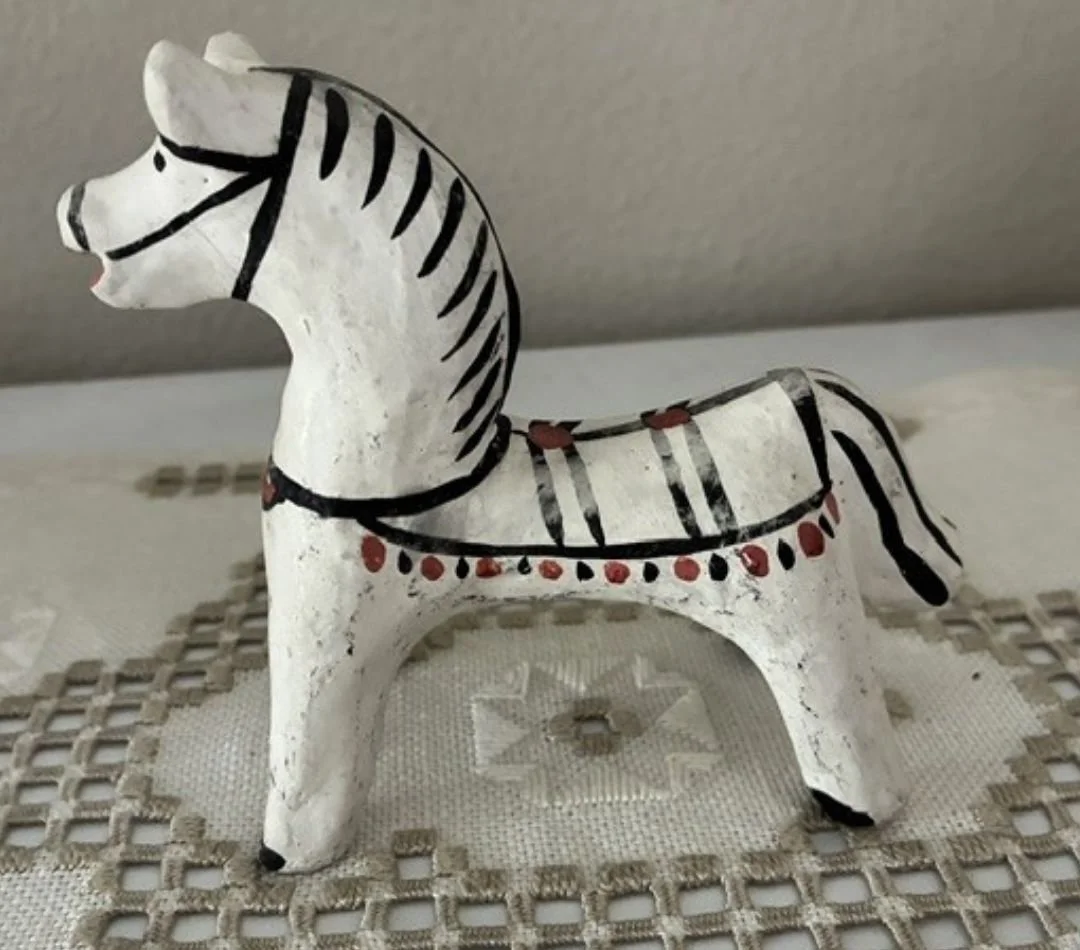
What an ancient Nordic calendar can teach us about staying curious in a changing world.
October 14 was Mitten Day.
Did you know that? Until fairly recently, I didn't either.
And discovering why it was called Mitten Day sent me down a rather delightful rabbit hole involving my Nordic heritage, ancient calendars, seasonal transitions, and eventually, brain health.
Sometimes that's how curiosity works. You begin with one small question and discover an entire world waiting behind it.
A Little Family History
Although I wasn't born in Norway, I am first-generation born American, raised with many of the foods, customs, and traditions of my father’s Scandinavian family. I still have first cousins there, and my connection to that heritage has remained an important part of my life.
As I began thinking and writing about autumn transitions this year, I became increasingly interested in how my ancestors in the very far North understood the changing seasons.
Not just how they celebrated them, but how they lived with them.
In the northern latitudes, seasonal change was no small matter. Preparing for winter required an intimate understanding of the natural world. It was a short growing season to be sure, but still there were crops to harvest, food to preserve, animals to care for, and supplies to gather before the darker, colder months arrived.
That curiosity and investigation that followed led me to something called a primstav.
A Mitten, a Calendar, and the Beginning of Winter
A primstav was a traditional Norwegian perpetual calendar, often carved into a wooden staff. Rather than looking like our modern calendars, it used a series of marks and symbols to identify days, religious observances, and important seasonal events.
Many had two sides: summer and winter.
And on October 14, the calendar turned to its winter side.
The symbol marking that transition?
A mitten.
How wonderfully practical is that?
October 14 was known as the first winter day, or Vinterdag. The mitten was a reminder that the season had changed, and it was time to prepare accordingly.
I enjoy the simplicity of a worldview that divides the year into two broad seasons: light and dark, warm and cold.
It also makes me think about how closely people once had to observe their environment. Understanding the seasons wasn't simply a matter of appreciating autumn color or anticipating the first snowfall. It was essential knowledge.
The ability to observe, learn, adapt, and sometimes venture into unfamiliar territory helped people survive and thrive.
I think those same qualities are valuable today.
Curiosity and Brain Health: A Little Exercise for the Brain
So what does an ancient Norwegian calendar have to do with brain health?
Quite a bit, as it turns out.
One of the interesting things researchers have discovered about curiosity is that it does more than encourage us to seek information. Being genuinely curious can also influence how we learn and remember.
When something captures our interest, brain systems involved in motivation, attention, and memory become engaged. Research suggests that information learned during periods of heightened curiosity may be remembered more effectively.
Even information we weren't specifically trying to learn may be a benefit.
I love that idea.
It suggests that following an interesting question isn't necessarily a distraction from something more productive. Sometimes, it is the productive thing.
Curiosity invites us to pay attention. It encourages us to make connections between what we already know and something unfamiliar.
And importantly, it gives us a reason to keep learning.
Novelty doesn’t have to mean Adventure
When we talk about trying something new, it's easy to imagine something rather ambitious: learning another language, traveling to an unfamiliar country, or taking up an entirely new hobby.
Those are wonderful possibilities, but novelty can be much simpler.
It might be learning to cook something from another culture (or your own that you just have never taken the time to fix on your own), learning the history of some place you’ve noticed but haven’t investigated; maybe go to a museum you’ve known about but have never visited.
For me, it might be working through a more complicated Norwegian knitting pattern. Or even learning more about the programs at my local zoo (PDZA) that work in concert with other zoos across the world to save several endangered species (I’m especially in love with the Clouded Leopards). But it might be as simple as bothering to look up the origin of a word I keep seeing …
And sometimes, apparently, it means discovering that a mitten carved into an old wooden calendar has a story worth exploring – and sharing.
The important part isn't how impressive the activity looks to someone else.
It's whether it engages your interest.
Follow One Thread of Curiosity
Here's an invitation for the coming week.
Find one thing that makes you wonder.
It might be something you've walked past a hundred times without really noticing, a question that comes up in conversation, or a family tradition whose origins you've never explored.
Then give yourself permission to follow it. Look up the details; ask someone in your family who knows more than you do about it. Then share the information with your crew, so they now know it, too.
You don't need to master anything, start a new project, or turn your discovery into another item on your to-do list.
Just be curious.
Perhaps one question will lead to another. And perhaps you'll discover something unexpectedly delightful along the way.
After all, I started with a mitten and ended up writing an article about brain health.
Who knows where your curiosity might take you?
Continue Your Brain Health Journey
Curious about how your everyday habits are supporting your brain?
The Brain-Healthy Habits Check-In offers 10 simple questions to help you see what's already working and where one small change might make a difference.
It's free, takes about two minutes, and is an easy place to begin.
Take the Brain-Healthy Habits Check-In
Explore your next step forward.
What’s In My Brain Health Toolkit?
10,000-Lux Light
A recommendation from my rheumatologist, I’m using this regularly now. and especially welcome as our Pacific Northwest mornings grow darker. Bright light in the morning helps support my daily rhythm as the seasons change.
Sudoku
An almost-daily companion since my brain injury in 2019. It’s familiar now, but I still enjoy the concentration, pattern recognition, and small satisfaction of solving the puzzle.
A New Knitting Project:
I deliberately choose projects that ask me to learn something new—more complicated stitches, colorwork, or a pattern that makes me stop and think. right now I’m working on a “Blue Wave Hat” with Morse Code stitches that say “Love” and “Vote”. Pattern on Ravelry.
New fleece lined Birkenstock Slippers
Another rheumatologist recommendation: because foot support inside the house (as well as outside) keeps my feet healthy, supports my posture, and helps keep me safer from falls. Brain health starts with protecting from falls as we age. I got mine from the online Birkenstock store because they weren’t available locally.
Vitamin D3
I stay on this year round because it is medically indicated. Check with your provider if you think you need more than the average dose; pretty commonly indicated above the 45th parallel. (As always, supplements are best individualized to your own needs and health care guidance.)